ABLE BC Cannabis Industry Townhall Recap, BC Budget 2026 Commentary, Health Canada Updates, and more industry news inside. ---------------------------------------------------------------- |
|
|
Cannabis Industry Update: March 11, 2026 |
|
|
Dear ABLE BC Cannabis Members and Industry Colleagues,
Here's the latest news for the private cannabis industry: - ABLE BC Cannabis Industry Townhall Recap and Survey
- ABLE BC Commentary on BC Budget 2026
- ABLE BC is Hiring! Community Ambassador Role
World Cup Vancouver: Cannabis Delivery Times - West Coast Weedery: Curated Cannabis
BC Adopts Permanent Daylight Saving Time Minimum Wage Increases on June 1, 2026 - Proposed Changes for BC Employers, Worker Complaint Process
- Canada's Cannabis Market Continues to Grow: Sales, GDP, Trends
- Health Canada Updates & Reminders: What LPs Should Know
- Health Canada Removes CBD NHP Regulation Proposal
- West Coast Weedery: Curated Cannabis
- Member Spotlight: Kēlo Cannabis
go2HR: Learning Circles - Indigenous Perspectives on Psychological Safety Out and About with ABLE BC -
Save the Date: Upcoming Events and Webinars
- Help our Cannabis Advocacy - Join ABLE BC
|
| |
|
ABLE BC Cannabis Industry Townhall Recap and Survey |
Last week, ABLE BC hosted a virtual Townhall for cannabis retail members, bringing together industry stakeholders from across the province to discuss key issues affecting the sector.
The session provided an opportunity for members to hear the latest advocacy updates, share insights on current industry trends, and participate in an open discussion about the challenges and opportunities facing private cannabis retailers in British Columbia.
A member survey will be shared soon to gather additional feedback and help inform ongoing advocacy efforts. ABLE BC cannabis retail members are encouraged to participate and share their perspectives.
If you would like to receive the survey once it becomes available, please contact comms@ablebc.ca. |
ABLE BC Commentary on BC Budget 2026 |
Following the tabling of BC Budget 2026 , ABLE BC has reviewed the fiscal plan to assess what it may signal for British Columbia’s cannabis sectors.
Below are several key observations from ABLE BC’s review.
Health Remains a Key Priority for BC One of the most notable elements of the fiscal plan is the scale of expenses dedicated to the Ministry of Health. Ministry Expenses (millions): - 2026/27: $36,116
- 2027/28: $37,302
- 2028/29: $38,404
Health remains the largest ministry expense in the provincial budget, and are projected to continue increasing over the next three years.
Continued Major Investment in Health Infrastructure The fiscal plan also outlines significant capital spending for health infrastructure.
Health Capital Spending (millions): - 2026/27: $3,769
- 2027/28: $3,924
- 2028/29: $3,385
This represents the highest level of healthcare capital investment in the past five years, reinforcing the central role health care plays in provincial fiscal planning.
Modest Declines in Ministries That Directly Impact the Sector Two ministries that directly influence the regulatory environment for liquor and cannabis businesses are projected to see flat budgets. Ministry Expenses (millions):
Agriculture and Food - 2026/27: $135
- 2027/28: $130
- 2028/29: $130
Public Safety and Solicitor General - 2026/27: $1,100
- 2027/28: $1,100
- 2028/29: $1,099
While the changes are modest, ministry budgets may create challenges in areas such as: - Policy development and modernization
- Regulatory enforcement
-
Licensing and operational improvements
Limited bandwidth within regulatory ministries may slow the pace of policy reforms or operational enhancements that could benefit industry stakeholders. LDB Revenue Forecast Declining The fiscal plan forecasts declining revenue from the BC Liquor Distribution Branch (LDB).
Forecast Net Income (millions): - 2026/27: $945
- 2027/28: $897
-
2028/29: $847
The budget notes that the reductions reflect: “ Lower expected sales revenue due to economic conditions, shifts in consumer purchase preferences, and a downward trend in liquor consumption.”
BC's Share of Cannabis Excise Tax Remains Stable
In contrast to liquor revenue projections, projected revenue from the BC's share of the federal cannabis excise tax is forecast to stay the same. Forecast Revenue (millions): - 2026/27: $130
- 2027/28: $130
- 2028/29: $130
Rising Taxes May Influence Consumer Spending Budget 2026 includes several revenue measures that will increase overall tax contributions across the province. Projected increases include: - Personal income tax revenue
- Corporate income tax revenue
-
Property tax revenue
These increases may have several implications for the sector: -
Consumers may adjust discretionary spending, including retail purchases.
- Operating costs for businesses may rise , particularly through property and corporate tax impacts.
-
Businesses may need to adapt their offerings, pricing strategies, and operations to respond to changing consumer spending patterns.
Increased Capital Investment in the Liquor Distribution Branch Capital spending for the LDB is projected to increase over the next three years. Capital Spending (millions): - 2026/27: $20
- 2027/28: $30
- 2028/29: $30
This represents the highest level of capital investment in the LDB over the past five years. The budget indicates these investments will support: -
Store upgrades and improvements
- Technology-related projects
- Equipment replacement and operational improvements
ABLE BC remains optimistic that these investments will also generate benefits for private retail and cannabis businesses, which are essential partners in the province’s economic activity, employment, and tax revenue generation.
With health care representing the largest provincial expense, government may continue examining how various regulated industries— including cannabis — contribute to broader public revenue and health system funding.
ABLE BC's Bo Chen comments:
"The cannabis industry continues to demonstrate its' vital role in creating revenue for the province, particularly through the excise share and contributions to through the LDB. However, innovation and modernizing BC's cannabis policies will help strengthen our industry further to play an even larger role as an economic engine - delivering revenue and employment in our province."
For more insights and perspectives on how Budget 2026 impacts our industry, please contact bo@ablebc.ca. |
|
|
People
Working Well The Canadian Mental Health Association has created a resource hub for employers and employees dealing with mental health challenges at work. |
| Cannabis Industry Update Newsletter Sign up for our Cannabis Industry Update Newsletter to learn more about our advocacy for cannabis retail businesses. Click here to read past cannabis newsletters. |
|
ABLE BC
Member Portal
The Member Portal is your hub for all resources and benefits available to ABLE BC members. Contact jesse@ablebc.ca if you need help logging in. |
|
|
ABLE BC is Hiring! Community Ambassador Role |
We’re hiring! Are you a natural connector who loves building community? We’re looking for a Community Ambassador to join ABLE BC and help us grow and engage our membership across BC’s liquor and cannabis industries.
This is a relationship-first role focused on: - Membership recruitment & retention
- Industry engagement
-
Events & outreach
- Supporting BC businesses to thrive
If you have experience in sales, hospitality, liquor or cannabis retail (or just genuinely love this industry), this could be your next step. - Hybrid (Vancouver-based)
- Apply by March 27, 2026
-
Send your cover letter, resume, and salary expectations to bo@ablebc.ca
If you’re relationship-driven, confident in outreach, and passionate about supporting BC’s private liquor and cannabis businesses, we’d love to hear from you.
Find the full job description here. |
|
|
World Cup Vancouver: Cannabis Delivery Times
|
With Vancouver set to take centre stage as a Host City for the FIFA World Cup 26™, kicking off June 13, 2026, retail and hospitality businesses across the region have a major opportunity ahead — and an important deadline to prepare for. Cannabis Delivery Times - Will Your Business Be Impacted?
In a collaborative effort between ABLE BC and the BC Liquor Distribution Branch, ABLE BC is reaching out to members and cannabis retail operators in Vancouver to help coordinate cannabis delivery times for businesses that may be impacted by FIFA-related road closures and events. Access the Community Activation Playbook (includes road closure info) HERE.
View the Match Day Schedule HERE.
If your business anticipates any challenges receiving deliveries, please email bo@ablebc.ca with your licence name, address, and your usual delivery days and times. |
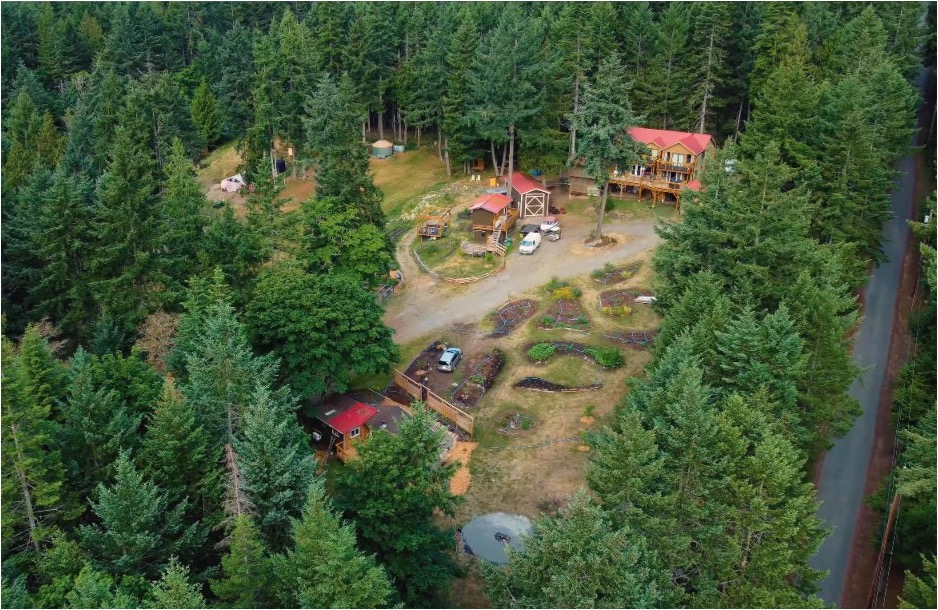
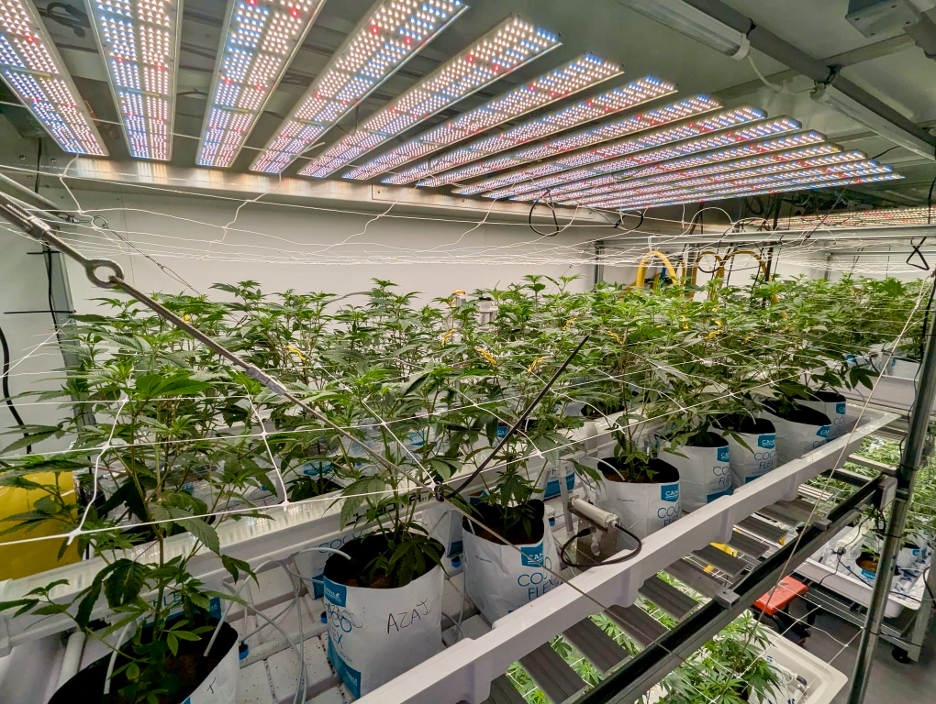
West Coast Weedery (WCW) is a micro-production and processing facility located on a small 3.5 acre farmstead on picturesque Galiano Island in the Southern Gulf Islands of British Columbia, Canada.
Launched in December of 2025, WCW cultivates, sources, and markets premium small-batch craft cannabis products for Direct Delivery to retailers across the province. Our goal is to curate unique offerings that embody innovation, integrity, and exceptional quality while also supporting the BC economy and local environment. WCW is a small and passionate team consisting of Adam Clarke (CEO, Head Grower), Kathrin Mathias (Farm Manager), Sean Gallant (Operations Manager), and Paul Kamon (Sales & Marketing Manager). |
All operations on the farm are powered by Stratus Designs and Reliable Controls. Stratus Designs is West Coast Weedery’s sister company and is a leader in the Cannabis automation and control industry. Having been involved in over one hundred Cannabis facilities and projects across the country Stratus is arguably the largest automation provider for Cannabis in Canada. Stratus controls all indoor horticulture, greenhouses, power distribution/monitoring as well energy optimization on the farm.
The farm property is run and operated by Galiano Grow House (GGH), which looks after the land, the farming and all the Bed and Breakfast operations. We have a fully lit up and wood fired greenhouse which runs and produces food for the farm and the community all year. Currently excess food production is used at “Oxeye” the local coffee shop and specialist of farm to table style cuisine. There is a large sauna, outdoor hot tub and mini-golf course for guests as well as a seasonally open disc golf course. We strive to have fun and allow guests an opportunity to relax and enjoy themselves. Galiano Grow House is not only a Cannabis friendly property it is a Cannabis encouraging property!
|
GGH also has an industrial hemp license and grows 300+ CBD-rich hemp plants every year with our goal producing a smokable medicinal flower, however more so as an education tool to show the public this wonderful plant and teach classes and seminars on cultivation. |
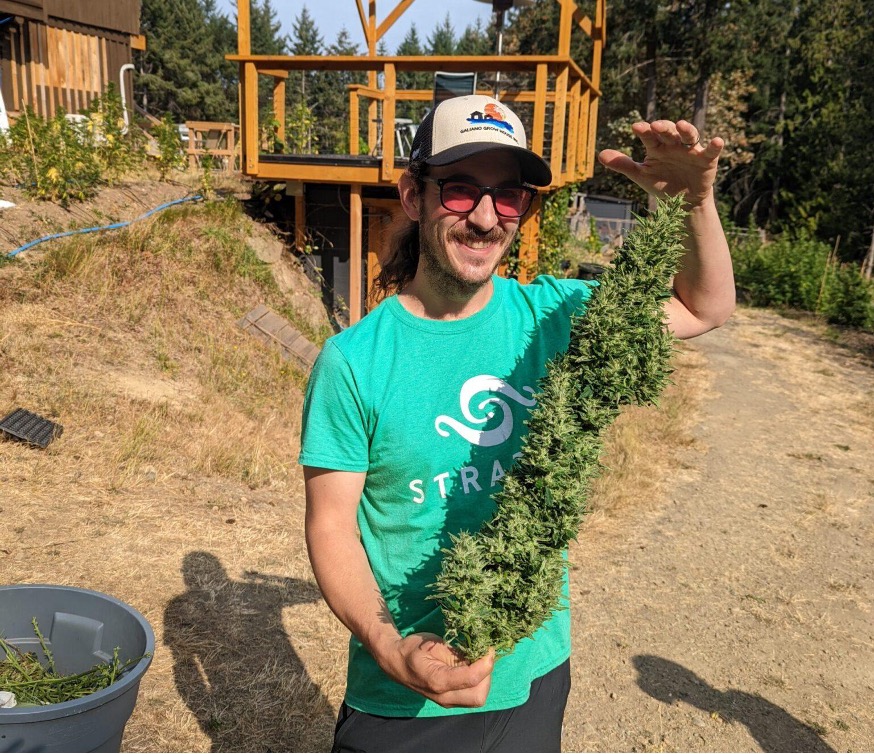
Adam Clarke holding a large Umpqua CBD hemp flower cluster at harvest time |
BC Adopts Permanent Daylight Saving Time |
The Government of British Columbia has announced that the province will move to permanent, year-round daylight saving time beginning in 2026, ending the long-standing practice of changing clocks twice a year.
Since the clocks moved forward one hour on Sunday, March 8, 2026, British Columbians will now remain on daylight saving time permanently. The fall time change, previously scheduled for November 1, 2026, will no longer take place. The province says the change is intended to reduce disruptions caused by switching clocks twice each year. Eliminating the seasonal time change is expected to make scheduling easier for families and businesses while providing an additional hour of evening daylight during the winter months.
Businesses and organizations across BC will have eight months to prepare before the final fall time change is removed from the calendar.
ABLE BC was engaged by the Premier’s Office earlier in the policy process and expressed support for the change. The shift also aligns with broader discussions taking place across North America about eliminating seasonal time changes. |
Minimum Wage Increases on June 1, 2026 |
The Government of British Columbia has announced that the province’s general minimum wage will increase to $18.25 per hour effective June 1, 2026.
This increase is part of an automatic annual adjustment established under the Employment Standards Act. Since 2024, minimum wage increases in B.C. have been tied to the annual average change in the province’s Consumer Price Index (CPI). For 2026, the CPI increase was slightly over 2.1%, with the final wage rounded to the nearest nickel. Additional Wage Categories Also Increasing
The 2.1% increase will also apply to several other minimum wage categories, including rates for: - Resident caretakers
- Live-in home-support workers
-
Live-in camp leaders
- App-based ride-hailing and delivery-service workers
In addition, the increase will apply to minimum agricultural piece rates for the hand harvesting of certain crops. However, those piece rate adjustments will take effect December 31, 2026.
Learn More - Members can review the official announcement from the Ministry of Labour
-
Additional information about minimum wage rules is available through the Employment Standards Branch
-
If you have questions about how the minimum wage applies in specific situations, you can contact the Employment Standards Branch directly
-
ABLE BC will continue to keep members informed about labour policy changes that may impact cannabis businesses across the province.
|
Proposed Changes for BC Employers, Worker Complaint Process |
The Government of British Columbia has introduced proposed amendments to the Employment Standards Act and the Temporary Foreign Worker Protection Act to improve how workplace complaints and disputes are handled.
The changes are intended to streamline the complaint process through the Employment Standards Branch (ESB), helping resolve issues more quickly while maintaining fairness for both employers and workers. The amendments would create more opportunities for early resolution of straightforward complaints, improve clarity in investigations, and make it easier for workers to recover unpaid wages.
The ESB investigates complaints related to employment standards for non-unionized employees and temporary foreign workers and works to facilitate voluntary compliance between employers and employees or issue decisions and penalties when violations occur. According to the province, approximately 75% of ESB resolution meetings already result in voluntary settlements within 30–45 days after a file is assigned. The proposed changes aim to further improve the efficiency of this process. Read the full announcement here. ABLE BC will continue to monitor the legislation and share updates as it progresses. |
Valued Partners of ABLE BC - Cannabis |
Our valued partners play a vital role in advancing our industry, and we’re proud to highlight their continued support. |
Canada's Cannabis Market Continues to Grow: Sales, GDP, and Industry Trends |
In 2025, the cannabis sector contributed nearly $11.6 billion to Canada’s GDP, with the majority of that coming from licensed cultivation and processing. Licensed producers accounted for more than $10.6 billion, marking a 31% increase from 2024, while licensed cannabis retailers contributed approximately $946 million, reflecting more modest but steady growth.
Even with the expansion of the regulated market, the illicit sector still represents a sizeable portion of economic activity. Unlicensed cannabis production contributed an estimated $1.56 billion to GDP, while illicit retail sales accounted for roughly $868 million.
Consumer spending on cannabis also remains strong. Household spending reached $12.4 billion in late 2025, surpassing expenditures on categories such as tobacco, footwear, and household appliances. At the same time, cannabis is generating meaningful public revenue. In the final quarter of 2025, cannabis-related taxes contributed over $1 billion to provincial revenues supporting public services such as health care and education.
Government revenues from legal cannabis sales continue to rise as well. In the fiscal year ending March 31, 2025, federal and provincial governments collected $2.5 billion from recreational cannabis sales, representing an 11.5% increase from the previous year.
During the same period, legal cannabis retail sales reached $5.5 billion, a 6.1% increase year over year. However, the pace of growth has slowed compared to earlier years of legalization as the market matures.
Meanwhile, alcohol sales revenue declined by 4.2%, marking the largest annual drop since Statistics Canada began tracking the data in 2004.
Product trends within the cannabis market are also shifting. Dried cannabis flower remains the largest category, accounting for nearly 60% of sales, but inhaled extracts such as vape products, hash, and concentrates are growing quickly, increasing more than 12% year over year and now representing nearly one-third of the market.
Other product categories saw mixed results. Sales of ingestible cannabis extracts such as oils and capsules rose modestly, while edible cannabis sales declined slightly. Cannabis beverages, however, continued to gain traction with sales increasing nearly 9%. Sources |
Health Canada Updates & Reminders: What LPs Should Know |
Health Canada has recently issued reminders and guidance for federally licensed cannabis producers (LPs), focusing on rules related to cannabis samples and facility tours. Below are some key takeaways for licence holders: Cannabis Sampling Rules - Samples must stay at the licensed site; temporary transport is allowed if documented.
- Only authorized individuals (licensed producers, retailers, or distributors) may receive samples.
- LPs must ensure secure handling, tracking, and record-keeping, including recipient details.
- Federal rules allow samples, but provincial policies determine whether retailers can accept them.
Facility Tour Guidelines - Public access to operational or storage areas is restricted; only necessary personnel may enter.
- Tours showing cannabis must be limited to adults; youth cannot see products or packaging.
- Marketing, promotion, and inducements must comply with federal and provincial rules.
- On-site consumption rules are governed provincially/municipally.
Health Canada may enforce compliance. LPs should review procedures to ensure regulatory adherence for both sampling and tours.
Sources |
Health Canada Removes CBD NHP Regulation Proposal |
Health Canada has removed its plan to create a regulatory pathway for CBD products as Natural Health Products (NHPs) from its 2025–2027 Forward Regulatory Plan, signaling the initiative is not moving forward.
The proposal, under study since 2018, would have allowed some CBD products to be sold without practitioner oversight. Feedback from a 2025 consultation revealed divisions: industry opposed requiring a Cannabis Drug Licence (CDL), while healthcare providers and some governments supported stricter controls, including manufacturing standards, warning labels, and Certificates of Analysis. Many agreed that low-dose CBD could be sold in pharmacies and health stores.
Health Canada noted that developing this pathway would require significant resources, which are not currently available. The department is prioritizing other initiatives, like reducing regulatory burdens for natural health products. For now, CBD remains available through medical cannabis with physician authorization or non-medical retailers, where health claims are not permitted. The regulator continues to recognize the potential for a future pathway.
Sources |
Member Spotlight: Kēlo Cannabis
|
At Kēlo Cannabis, the mission is simple: to help you embrace life with passion, adventure, and good vibes.
Based in Kelowna, BC, the team at Kēlo is obsessed with all things cannabis - from the latest strains to cutting-edge accessories - and loves sharing that knowledge with the community. Their dispensary reflects the fun-loving, adventurous spirit of the Okanagan, offering a variety of staples, brand names, and local products so every customer can explore what suits their lifestyle best. Kēlo Cannabis now operates two dispensaries, one in Kelowna and one in Pitt Meadows, offering an elevated in-store shopping experience as well as fast and free delivery. From connecting with customers about local hotspots to helping them find the perfect product, Kēlo Cannabis is dedicated to fostering community and inspiring people to live their most glorious life.
|
|
|
go2HR: Learning Circles - Indigenous Perspectives on Psychological Safety |
Creating psychologically safe workplaces means listening to diverse perspectives and learning from the communities that shape our industry. go2HR’s new Learning Circles video series featuring Indigenous educator Len Pierre brings Indigenous perspectives on psychological health and safety into BC’s Tourism & Hospitality workplaces.
Developed in partnership with the Canadian Mental Health Association (CMHA), this five-part series offers short, thought-provoking sessions designed to spark reflection and support more culturally and psychologically safe environments.
Each Learning Circle explores practical ways employers and teams can strengthen workplace culture. Topics include respectful and culturally safer terminology, understanding how feedback supports psychological safety, and applying Indigenous and trauma-informed approaches to conflict resolution. The series also explores how individuals and organizations can move from awareness to advocacy by creating space for Indigenous voices, practicing everyday allyship, and supporting reconciliation through workplace actions.
Together, these sessions highlight how cultural safety and psychological safety work hand in hand to create respectful environments where people feel safe to speak up, share ideas, and contribute fully. They also invite both employers and employees to reflect on how these perspectives can help shape stronger teams, safer workplaces, and more inclusive guest experiences across BC’s Tourism & Hospitality sector. Watch and share the Learning Circles series |
Save the Date: Upcoming Events and Webinars Check out these upcoming events: |
Help Our Cannabis Advocacy - Join ABLE BC
Do you own a cannabis retail store? Sign up now for an ABLE BC Cannabis Membership to support the work we do on your behalf.
As ABLE BC works to support BC’s cannabis retailers, we meet regularly with various officials at the LDB, LCRB, and with elected officials in the federal, provincial, and municipal government. With your support, we are making meaningful headway amending regulations and policies that support industry growth.
ABLE BC Cannabis Members have access to several benefit programs that offer exclusive discounts and are designed to help your business thrive. In addition to our benefit programs, we offer expert advice , regular webinars, and many networking opportunities.
|
|
|
|